WITH YOU FOR US ALL Magazine

Information about volunteer work

alle Filter löschen
Sortieren nach
zuerst
  • | Bericht, Mission reports

    Engagement in civil protection: Every day is a day of honouring volunteers

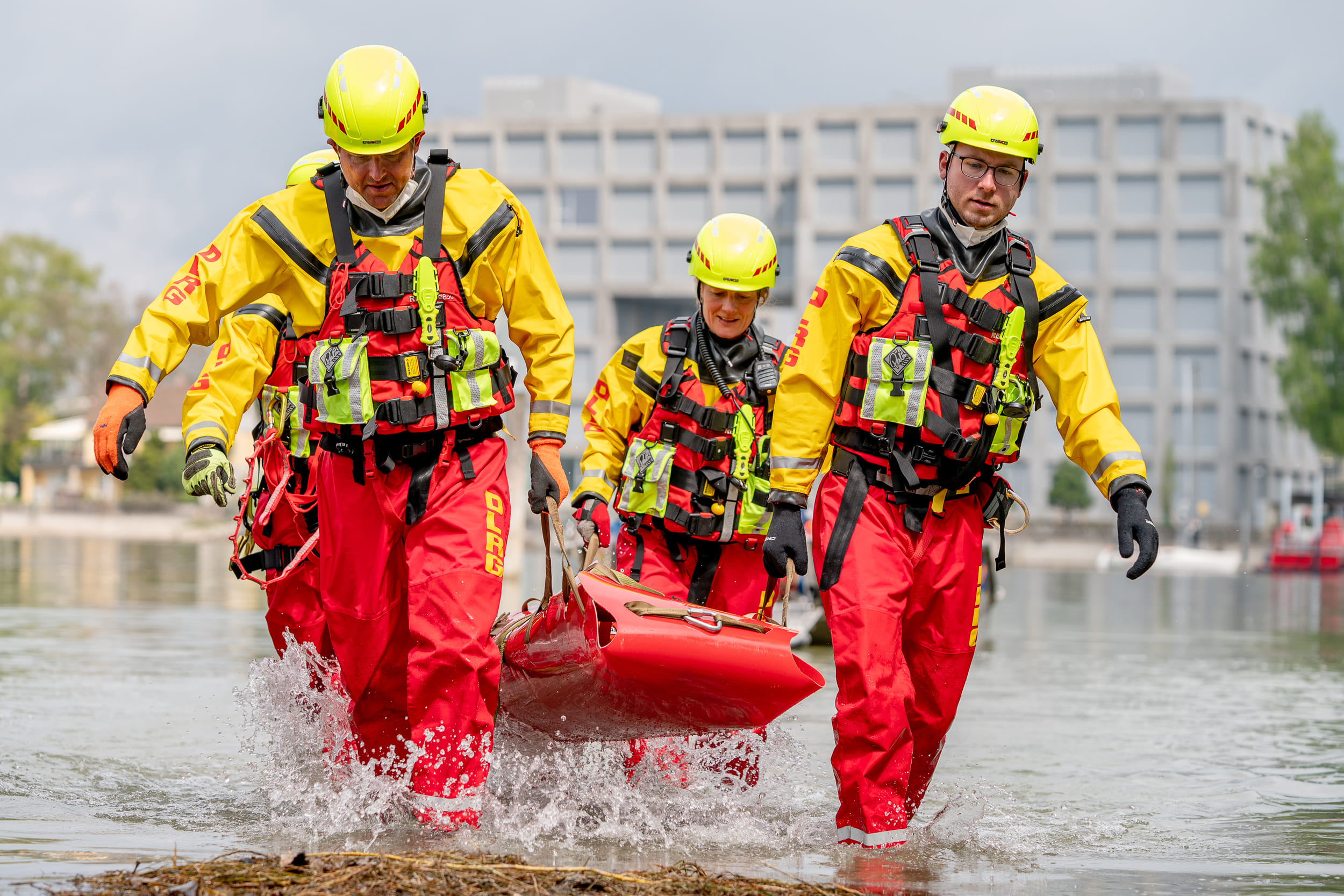
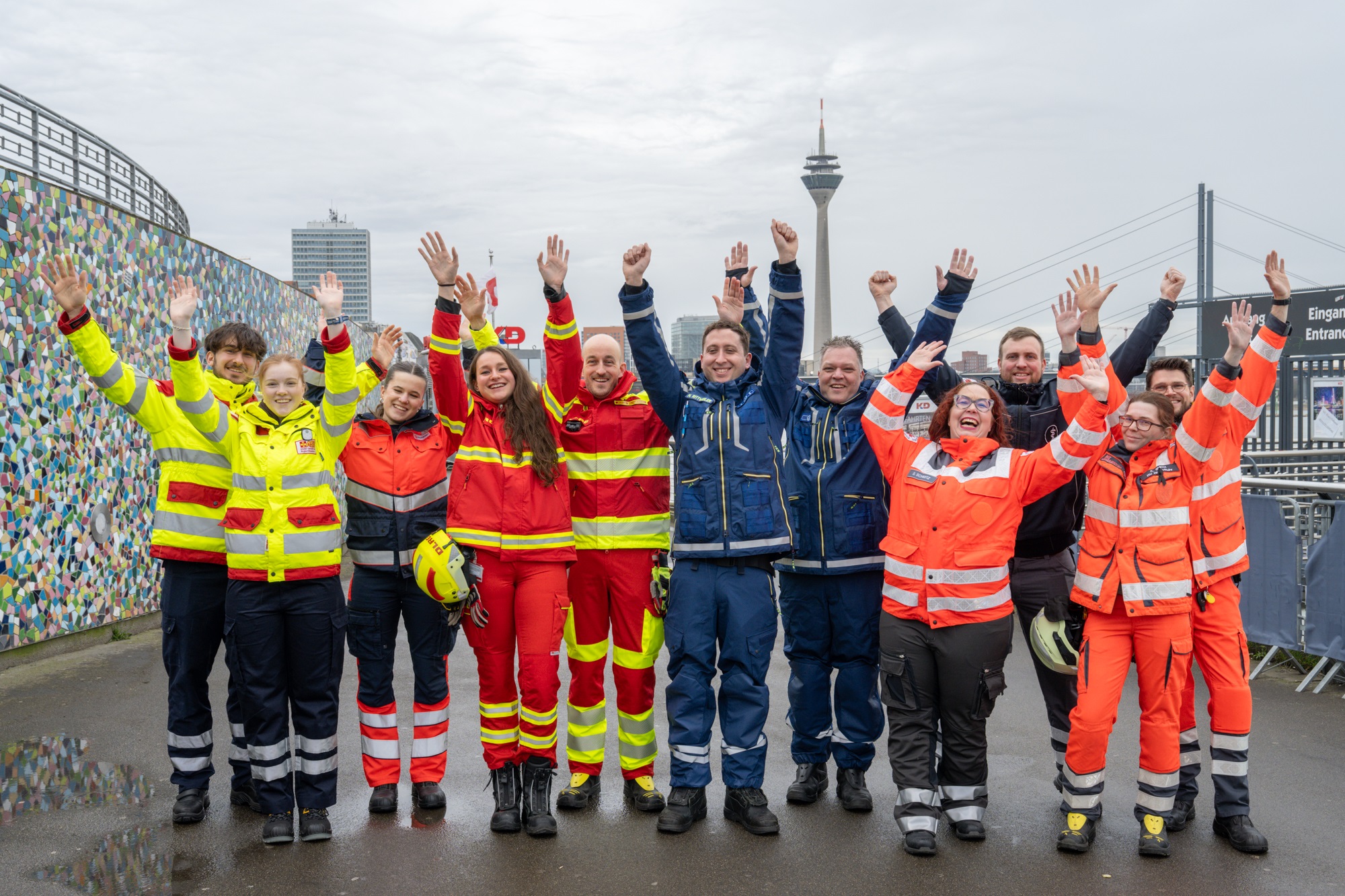
    More than support: why volunteering is indispensable Emergency responders from various aid organizations during a carnival operation. Whether firefighters, football coaches or refugee support workers, volunteers are the backbone of society. They are there for others in difficult situations and stand up for the common good. Especially in times of crises, uncertainty and growing loneliness, the importance of this commitment becomes particularly clear. Volunteering brings people together, strengthens communities and makes democracy more resilient. Even though volunteering is changing and traditional forms of volunteering are increasingly being complemented by new, flexible opportunities, one thing remains the same: volunteering is people serving people.    
    weiterlesen
  • | Bericht, Interviews, Report

    A celebration of voluntary work: The Helping Hand Awards 2025 at the Federal Ministry of the Interior

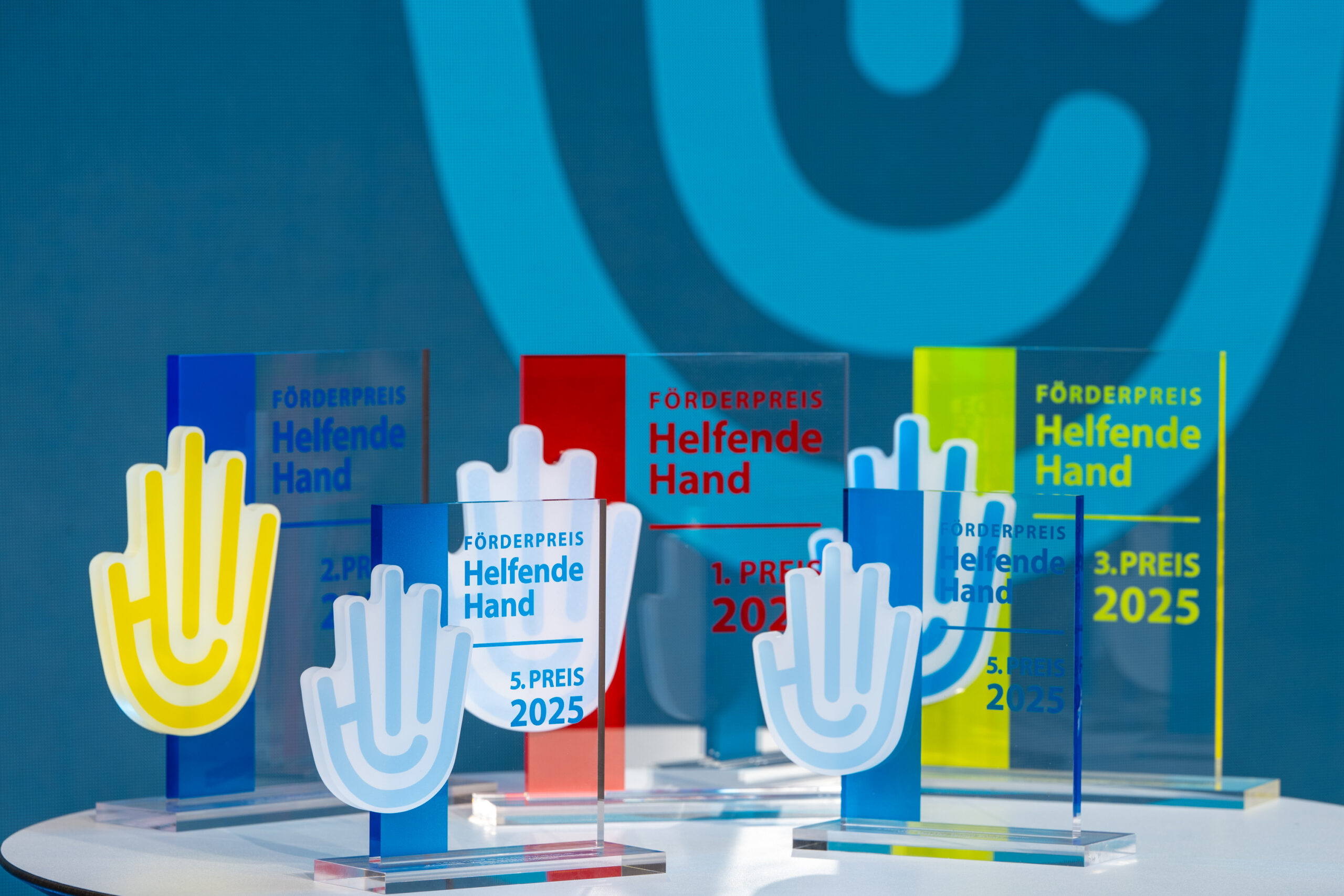
    The large event hall at the Federal Ministry of the Interior in Berlin: subdued lighting, murmurs of anticipation. Silence falls – the Berlin pub choir begins to sing, in harmony, richly, directly. The guests in the hall: emergency services from fire brigades, aid organisations and technical relief agencies, representatives from politics and associations – people who have been supporting and promoting voluntary civil protection for years. The trophies for the Helping Hand award shine in a new design.(Source: Björn-Arne Eisermann) Since 2009, the Federal Ministry of the Interior (BMI) has been awarding the Helping Hand prize, the most important award in Germany for voluntary work in civil protection. This year marks the 17th anniversary of the award ceremony, which traditionally takes place at the beginning of December, around International Volunteer Day. The award is an expression of a twofold solidarity: on the one hand, with the Helping Hand award, the BMI honours the more than 1.7 million volunteers without whom German civil protection would not be able to function. On the other hand, the award ceremony demonstrates how closely the Ministry works with the Federal Office for Civil Protection and Disaster Assistance (BBK). The BBK runs the office for the award, organises the competition year, supports the jury and public relations work, and finally the award ceremony at the BMI. The importance that the BMI attaches to this commitment is made clear right at the start in the welcoming address: Federal Minister of the Interior Alexander Dobrindt thanks those involved, praises the ‘people who use their knowledge, time and energy to ensure that our country functions in times of crisis’ and emphasises the key role of voluntary work in civil protection. Christoph de Vries, Parliamentary State Secretary at the Federal Ministry of the Interior, then takes over in the hall. He presents the awards as the winners come onto the stage full of anticipation. The ceremony is hosted by Clarissa Corrêa da Silva. She guides the audience through the programme with ease and warmth, combining the award presentation with short conversations on stage and following the theme of the day: people who are committed in very different ways to modern, inclusive and effective civil protection.
    weiterlesen
  • | Mission reports

    Help across borders: Europe’s emergency services in the fight against flames

    Hot summers, dry forests and increasingly complex vegetation fires: forest fires have long since become a European challenge. When flames rage in southern Europe, it is not only local forces that are deployed, but also specialised teams from other EU countries. The NRW forest fire module GFFF-V DE1, the expert advisors from the aid organisation @fire and Johanniter-Unfall-Hilfe Bonn prove that international cooperation in disaster control is successful – supported by volunteers and backed by the Union Civil Protection Mechanism (UCPM).
    weiterlesen
  • | Guest contributions

    Competitions and team spirit for the love of life – Johanniter Day in Erfurt

    Around 3.000 participants gathered at the Erfurt Exhibition Centre from 26 to 28 September for the nationwide ‘Johanniter Day’. The core of the event was the first aid and emergency rescue competition. Fifty winning teams from the preliminary competitions of the nine Johanniter regional associations and two guest teams competed against each other in a passionate, fair competition to determine Germany’s best rescuers.  
    weiterlesen
  • | Report

    Joining Forces For Civil Protection

    When the power fails, rivers burst their banks or forest fires rage, it is time for those who are ready to take action. In an emergency, everyone can help and play a part in ensuring the safety of all. In addition to volunteer organisations, associations, companies and specialist groups are also increasingly getting involved, contributing their own unique expertise to civil protection. Four exemplary projects show how cooperation across organisational boundaries can be successful and how volunteering can be strengthened in a targeted manner. Red Farmer: fighting forest fires with heavy equipment When forest or wildfires break out in rural areas, every minute counts – and often every available source of water. This is exactly where the Red Farmer project comes in. What began as an idea in the district of Südliche Weinstraße in Rhineland-Palatinate is now a growing network of farmers, winegrowers and fire brigades that can provide rapid and coordinated assistance in crisis situations. Via the online platform, agricultural businesses make their machinery and equipment available for civil protection purposes – including water tanks, tractors and slurry tankers. These can be requested directly by fire brigades and control centres when needed. The initiative brings together two groups that have long been closely linked: agriculture and the fire brigade. Many Red Farmer members are themselves involved in voluntary work or are familiar with firefighting procedures. Their technical expertise, local knowledge and willingness to lend a hand make them valuable partners in disaster control. Use of the network is voluntary, unbureaucratic and safe for all parties – because the helpers are covered by municipal accident insurance. The idea: pool existing resources, relieve the burden on volunteers and work together to strengthen the protection of the region. More than 500 agricultural machines are now registered in the system – and the trend is upward. Following its successful launch in Rhineland-Palatinate, Red Farmer is now also active in Bavaria, supported by the respective state fire brigade and farmers’ associations. The project shows how modern technology and active solidarity can work together – and that smart solutions sometimes come directly from the field. German Amateur Radio Club: Emergency radio for serious situations Maintaining communication when the power fails, mobile networks are overloaded and internet connections break down requires specialist technical knowledge. This is where the German Amateur Radio Club (DARC) comes in: with its nationwide network of radio amateurs, it can quickly establish independent communication in the event of a disaster, supporting authorities, organisations and the affected population until the regular communication channels are up and running again. The DARC has developed a nationwide emergency radio concept based on self-sufficient structures. Relay stations with emergency power supplies, portable radios and designated emergency frequencies enable a robust connection even in difficult situations. In regular exercises, local associations test for emergencies – for example, via radio rounds on frequencies such as 145.500 MHz (VHF) or 7,110 kHz (shortwave). Mobile operations centres and training in radio discipline are also part of the repertoire. The radio amateurs of the DARC work on a voluntary basis, but bring a high level of technical expertise to the table – for example, in terms of antenna construction and interference-free transmission. Their skills are increasingly recognised by authorities, who rely on the supplementary communications network in crisis situations. The DARC is continuing to expand its emergency radio capabilities and is specifically building bridges with authorities and organisations with security tasks (BOS). The project proves that civic engagement and technical expertise are an unbeatable combination when traditional communication channels fail. Dormagen Reservists’ Association: volunteering in flood protection The Dormagen Reservists’ Association in North Rhine-Westphalia shows how military expertise can save lives in a civilian context. For over 15 years, around 80 members of the association have been involved in flood and dyke protection – a task of growing importance in view of increasing extreme weather events on rivers such as the Rhine. The reservists take on a variety of tasks: they check dykes, fill sandbags, erect mobile flood barriers and secure critical infrastructure. When needed, they support the local operations management with professionalism, good training and well-coordinated cooperation. Regular training and joint exercises with the fire brigade, the Federal Agency for Technical Relief (THW) and other disaster control actors ensure that cooperation in an emergency runs smoothly. What makes the comradeship special is the combination of military discipline and civil society engagement. Many of those involved bring combat-proven experience from the armed forces – combined with a clear commitment to voluntary local aid. This mixture makes them a reliable partner in crisis situations. For its commitment, the Reservists’ Association 2024 was awarded third place in the ‘Support for Voluntary Work’ category of the ‘Helfende Hand’ (Helping Hand) sponsorship award. Its example stands for the successful integration of specialist knowledge into civilian civil protection, whereby it acts in a motivated, competent and locally rooted manner. WEMAG Netz GmbH and THW: Partnership for security of supply Extreme weather events place particularly high demands on the resilience of the electricity supply given our ubiquitous dependence on electrical energy. WEMAG Netz GmbH is a regional distribution network operator in Mecklenburg-Western Pomerania and parts of Brandenburg and Lower Saxony. Together with the eight local associations of the THW regional division in Schwerin, they have been meeting these challenges for over ten years through a close partnership that encompasses training, crisis management and technical cooperation. The focus is on preparing for power outages: THW personnel receive targeted training on the structures and processes of energy supply, learn how to use grid technology and train for emergencies together with WEMAG employees. Conversely, the grid company benefits from the THW’s disaster control expertise, for example in the use of emergency power systems, the logistical management of major damage situations or evacuation measures. The cooperation not only strengthens operational capacity in the event of a crisis, but also mutual understanding in everyday life. This allows planning processes to be coordinated, new technologies to be evaluated jointly and legal changes to be integrated at an early stage. Particularly in a large state such as Mecklenburg-Western Pomerania, where sparsely populated areas place special demands on network expansion, this cooperation is a valuable contribution to security of supply. In 2024, the project was awarded fourth place in the ‘Support for Voluntary Work’ category of the ‘Helfende Hand’ sponsorship award. It is a prime example of how companies and emergency services organisations can secure a robust infrastructure through continuous partnership – and thus strengthen voluntary work in disaster control. The four projects demonstrate how much potential there is in the interaction between aid organisations and other groups. Whether in agriculture, technology, the military or the economy – those who contribute their strengths make a valuable contribution to the resilience of our society. Such partnerships are indispensable, especially in times of increasing natural hazards and hybrid threats. They not only make civil protection more effective, but also more diverse – and thus sustainable.
    weiterlesen
  • | Bericht, Mission reports

    Exciting insights into the 3rd ASB national exercise: In action for civil protection

    On 28th June 2025, around 650 emergency service members gathered in Kassel for one of the most important training measures of the Arbeiter Samariter Bund (ASB), “Workers’ Samaritan Federation”, in the field of civil protection: the national exercise. The event was characterised by realistic scenarios and a review of operational procedures. The aim is to optimise processes, demonstrate operational capability in complex situations and strengthen cooperation between the various teams – from medical and rescue services, the rescue dog and drone squadron to technology and logistics. The exercise began punctually at 10.00 a.m. with speeches from high-ranking representatives: Hessian Minister of the Interior, for Security and Homeland Protection Dr. Prof. Roman Poseck and Knut Fleckenstein, ASB Federal Chairman, spoke to the helpers and guests from politics, partner organisations and science. The participating units set off from the staging area at the Kassel Exhibition Centre to tackle the three operational scenarios, which were to pose major challenges to the skills of the emergency services. Scenario 1: Train accident at the main railway station The first scenario: a dramatic train accident with a mass casualty incident (MANV). The emergency services had to act quickly and precisely in a confusing situation and not allow themselves to be distracted by observers. 20% of the volunteer emergency actors mimed patients in the red category – seriously injured people who require immediate treatment. The remaining actors were divided into yellow patients (serious injuries, but not immediately life-threatening), green patients (minor injuries) and uninjured parties, for example witnesses to the accident or upset passers-by who were talking distraught to the emergency services. A treatment centre with various tents was set up for treatment, including a tent of the Federal Medical Task Force (MTF). Here, victims could be sorted according to their degree of injury and treated efficiently. Care facilities and psychological emergency care units were provided for uninjured victims. In total, a mobile makeshift hospital and two hospitals in Kassel were involved in order to make the handover of patients as realistic as possible and to practise the hospitals’ emergency plans. Info: A MANV is an emergency with a large number of injured and damaged or affected persons that requires special planning and organisational measures. The special feature: this situation cannot be managed with the usual resources that are normally available for providing care. The Federal Medical Task Force (MTF) is a tactical unit with special capabilities for deployment in a situation of tension and defence (civil defence). It is part of the federal government’s cross-state disaster relief programme. Scenario 2: Missing persons in the forest The second scenario took place in the forest near the Hercules statue in Bergpark Wilhelmshöhe: a hot air balloon had crashed there and the emergency services had to find missing persons. A case for the ASB rescue dog teams! A total of 80 emergency service members were deployed with 22 dogs, which can track down people up to 500 metres away. The training of the dogs takes between 1.5 and 2 years and must be repeated every 24 months to ensure that they are ready for deployment. The teams were supported by a drone squadron that can recognise people with the help of artificial intelligence and therefore provides great added value during search operations. Scenario 3: Boat capsizes – water rescue on the River Fulda A life-threatening situation on the water: a boat has capsized on the River Fulda and human lives are in acute danger. As in the previous scenarios, a rapid response from the emergency services was essential. In addition, when rescuing people from flowing waters, there were all kinds of things to consider in terms of personal protection and the correct use of equipment. This showed once again how important coordinated cooperation and good communication are in disaster situations. However, not only the deployment scenarios themselves were a challenge for the volunteers. The participation of partner organisations from other European countries, such as Slovakia and South Tyrol, also put international cooperation to the test. The organisation of the exercise itself – in particular the incident command and catering for the emergency units – was also a major feat that was mastered with flying colours. The ASB national exercise proves how important it is to regularly test and improve processes. The exercise is made as authentic as possible through realistic presentations, including the make-up of fake injuries. The event emphasises how committed and professional ASB’s emergency services are. With state-of-the-art technology, well-trained teams and realistic scenarios, they are ideally equipped to help quickly and effectively in real emergencies. Would you also like to get involved in civil defence and disaster control and be right in the middle of an exercise? Then take a look at our interactive map! Interactive Map – Find Locations Find volunteer work in your area with just one click! Our interactive map makes it possible: type in your zip code, select the radius and off you go. Read Now  
    weiterlesen