07.06.2026 | Mission reports, Report
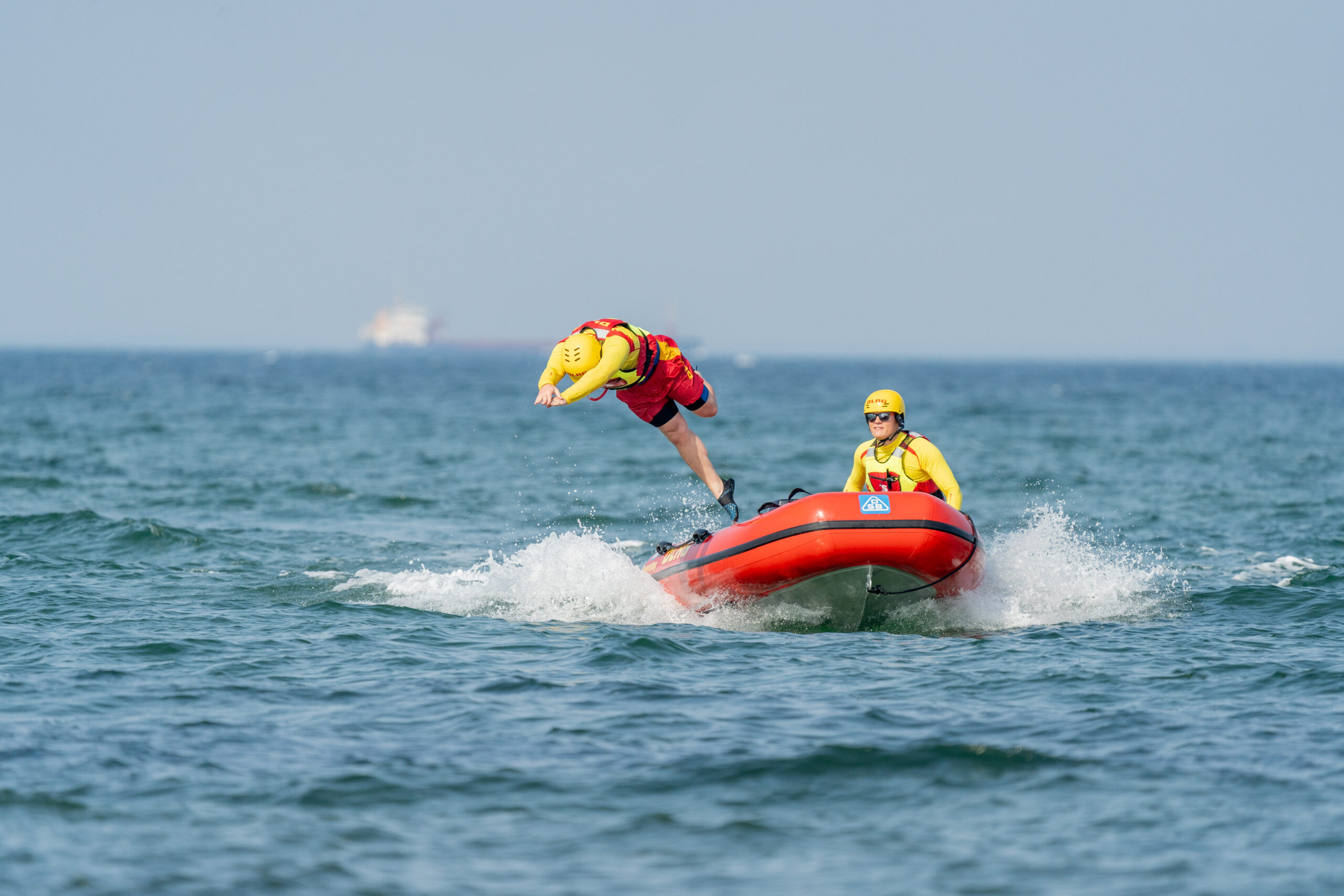
During a rescue drill, the boat crew of the ZWRD-K trains for a real-life emergency on the water. | © DLRG
While many people enjoy the summer on the coast, for others it marks the beginning of a busy season: every year, thousands of volunteers from the German Life Saving Association (DLRG) ensure safety in and around the water on the North Sea and Baltic Sea coasts.
Within the Central Coastal Water Rescue Service (ZWRD-K), emergency workforce from across Germany are deployed. They take on responsibility in a demanding operational environment, gain practical experience and save lives in emergencies.
Safety with structure and impact
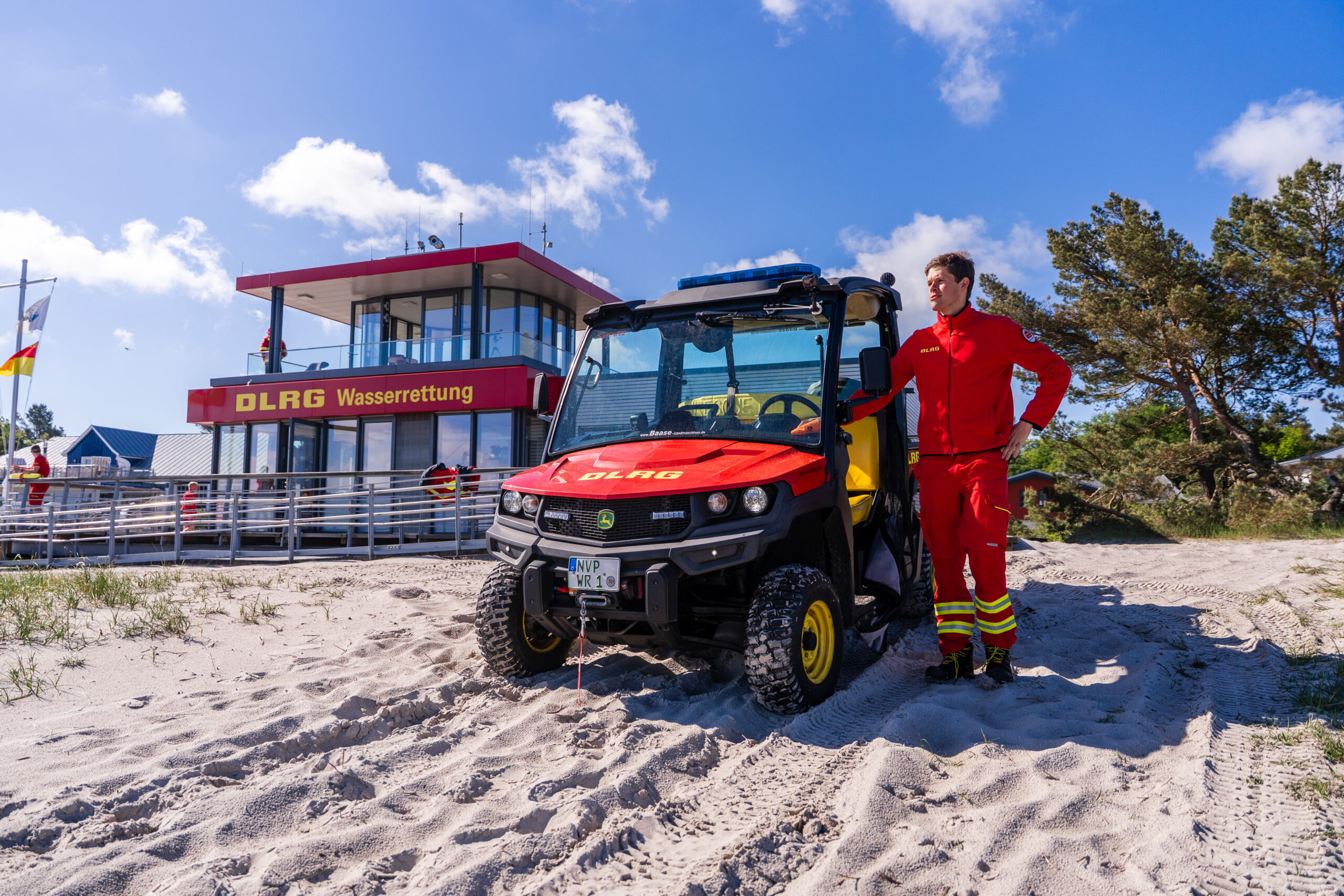
Between the dunes and the water rescue station, the all-terrain emergency response vehicle stands ready for the next deployment of the ZWRD-K. | © DLRG
The Central Coastal Water Rescue Service is centrally organised within the DLRG. While many areas of water rescue services are locally rooted, the ZWRD-K brings together personnel from across Germany and coordinates their deployment through the DLRG’s federal headquarters in Bad Nenndorf. Lifeguards from abroad may also be deployed, provided they possess the relevant qualifications. Around 6,500 volunteer helpers are scheduled each season, and approximately 7,500 station assignments are issued – deployments at lifeguard stations along the coast.
In summer 2025 alone, emergency personnel responded to more than 200 rescue operations, with volunteers saving at least 80 people from life-threatening situations. In addition, they provided more than 11,000 first aid services and carried out further operations – for example reuniting children and parents who had become separated on the beach. Overall, volunteers spend around 600,000 hours on duty each year ensuring the safety of bathers and water sports enthusiasts.
Their effectiveness is also evident in comparison: supervised beaches on the North Sea and Baltic Sea coasts are among the safest bathing areas in Germany and record significantly fewer fatal drowning incidents than unsupervised inland waters.
The ZWRD-K brings together people who often did not previously know one another and integrates them into existing operational structures. Particularly for young people, the service offers an attractive opportunity to apply and further develop their training in real-life operations. For many, it is also an incentive to train in water rescue services in the first place. “I wanted to make a meaningful contribution and give people safety in the water and on the beach,” explains watch leader Tobias (25) when describing his motivation.
When observation suddenly becomes an operation
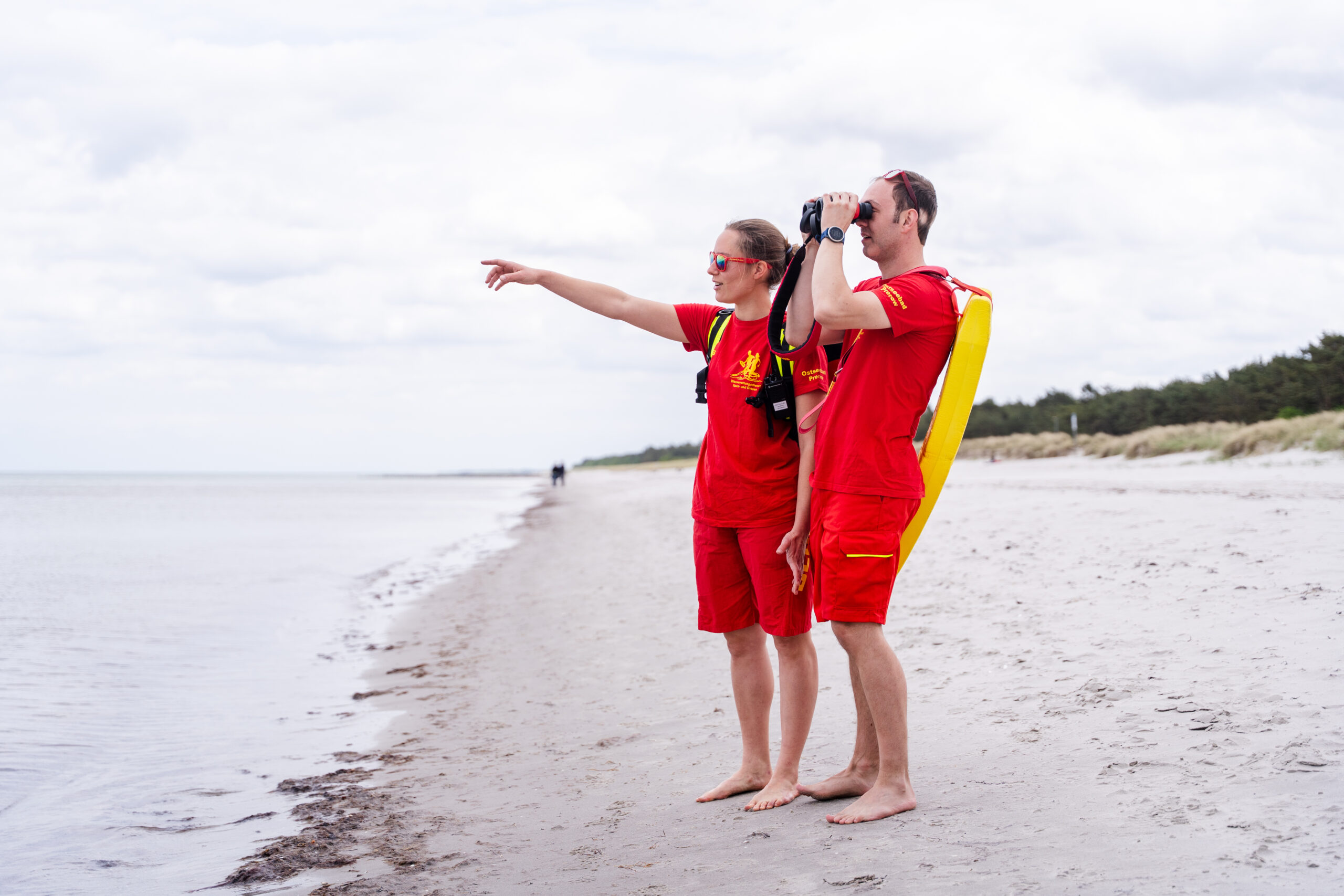
The lifeguards gaze out at the sea and keep watch over the beach and its visitors. | © DLRG
The work often appears uneventful, yet it places high demands on personnel: it requires constant vigilance, clear procedures and the readiness to act at any moment. A typical day begins with a joint briefing: “This is where things like weather conditions, particular hazards or events we expect throughout the day are discussed,” explains watch leader Elias (20). Afterwards, everyone takes up position on the watchtowers, from where they keep an eye on the beach and the water, and the actual work begins: observing, assessing, maintaining a visible presence. “A shift can be unpredictable,” says lifeguard Nadia (17), describing the situation – because at any moment an inconspicuous situation can turn into an emergency.
The range of tasks is broad. Alongside classic water rescues, medical emergencies, search operations and unusual situations are all part of everyday life – for example when potentially dangerous objects are discovered on the beach or medical emergencies develop on land. At the same time, emergency personnel serve as points of contact for beach visitors, provide safety advice and help prevent accidents through their presence. In addition to the actual watch and rescue work, regular exercises and training sessions also form part of daily life, for example involving rescue equipment, boats or radio communication. Organisational duties such as preparing and maintaining equipment are also required.
In all these situations, teamwork is decisive. “Teamwork comes first in the ZWRD-K,” emphasises boat operator Stine (25). Complex situations demonstrate how important clear communication and well-rehearsed procedures are. Water rescue services are therefore always a team effort –structured, coordinated and built on mutual trust.
How to join the ZWRD-K
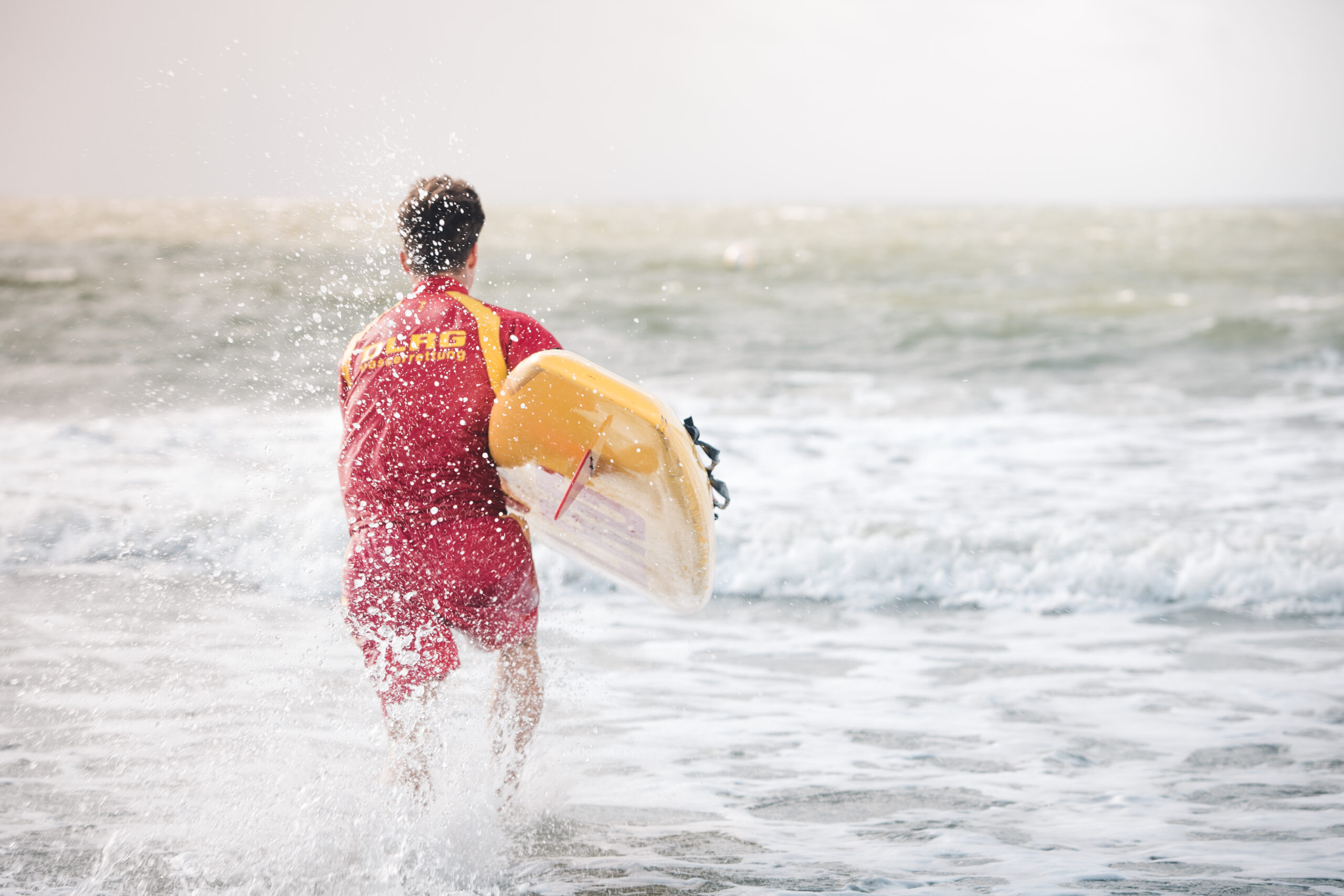
Battling wind and waves: well equipped, they head out into the surf. | © DLRG
Entry into the ZWRD-K is clearly regulated while deliberately remaining open to new volunteers. A prerequisite is the German Silver Lifeguard Award as well as first aid training. Applicants must also be at least 16 years old. Preparation for this qualification consists of theoretical and practical units, alongside examinations and supplementary training courses. Basic training comprises several training units totalling twelve hours of theory and practice, although individual prior experience can influence the overall workload. Many of the approximately 2,000 local DLRG branches regularly offer corresponding courses.
In addition, many volunteers prepare individually. “Beforehand, I mainly informed myself through videos on YouTube and content on Instagram, and I also read experience reports to get a sense of what to expect,” Tobias says when describing his introduction. Boat operator Anne (24) also emphasises the importance of additional qualifications: “I had just completed my water rescuer training and the Silver Lifeguard Award, and then immediately put that knowledge into practice.” Conditions on the coast in particular – with currents, waves and rapidly changing weather – place special demands on personnel, making additional preparation worthwhile.
Deployments are organised through a central online portal. Interested individuals indicate their availability and preferred locations and are subsequently scheduled by the coordination office. Behind this process lies a complex structure: teams responsible for personnel deployment, customer support and technology work together to coordinate personnel, infrastructure and equipment.
What is particularly notable is that people without DLRG membership can also get involved. Individuals who acquired their qualifications, for example at school or in the armed forces, are likewise able to contribute. For many, the journey therefore begins with a simple impulse. “I heard a lot from people who had been there and wanted to try it myself,” says Nadia – an introduction that often leads to repeated involvement.
More than an operation: Formative experiences in the ZWRD-K
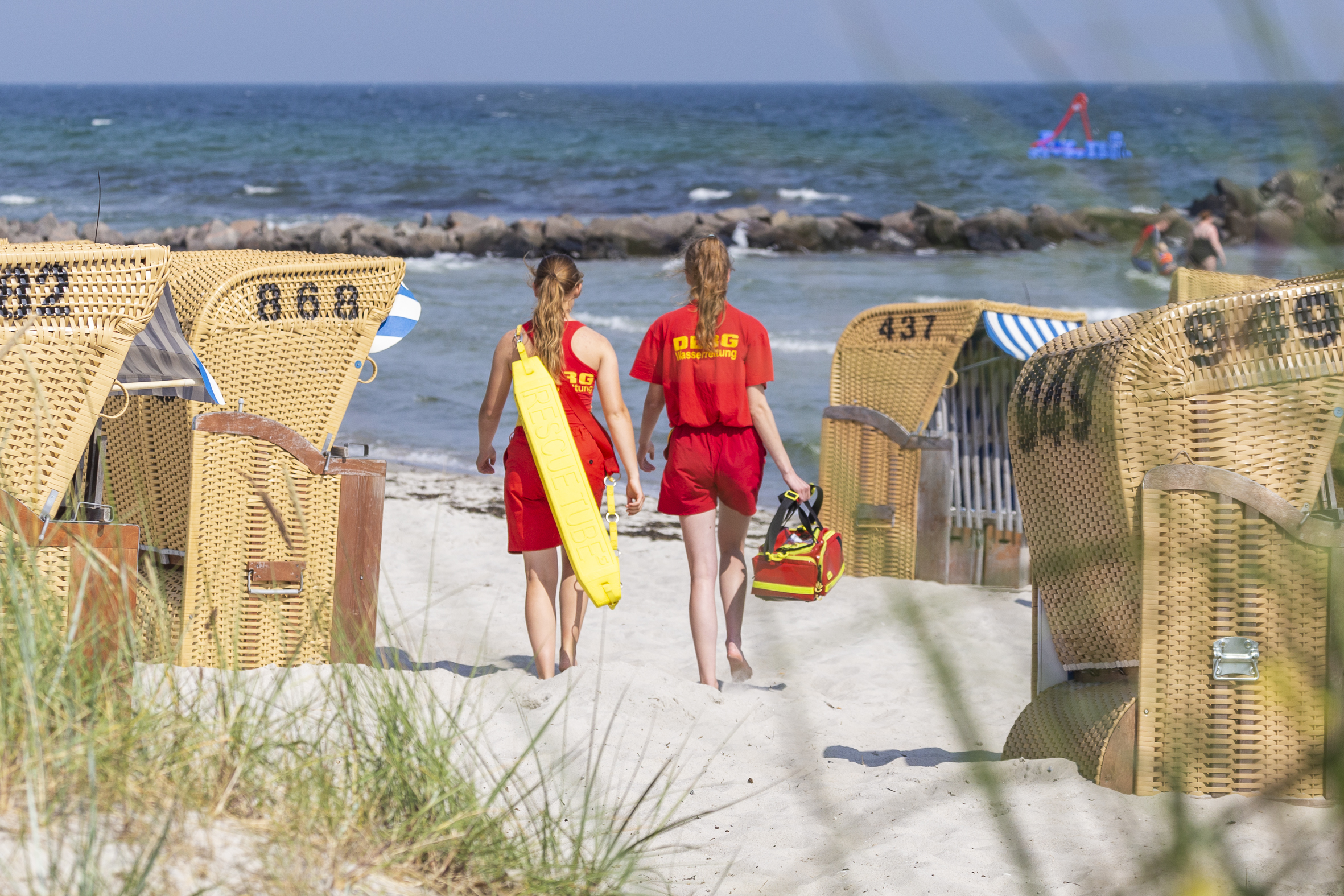
Summer, sun, water rescue: two female lifeguards begin their shift on the coast. | © DLRG
The particular strength of the ZWRD-K is especially evident in the experiences volunteers take away. The service is a practical field of experience in which professional skills and personal development are closely intertwined.
“It fulfils me to know that there are people who can rely on you,” says Elias. This responsibility leaves a lasting impression on many young volunteers. They learn to make decisions under pressure, take responsibility and act as part of a team. At the same time, they gain experiences that cannot be fully replicated in exercises or training situations: dealing with stressful situations, assessing complex circumstances and working together under real operational conditions. This also includes coping with psychologically stressful operations. For inexperienced emergency personnel, real emergencies can be challenging, which is why support services such as psychosocial emergency care (PSNV) are brought in when required.
There is also another aspect repeatedly highlighted: the sense of community. More than half of the volunteers are under 26 years old, and many spend one to two weeks on the coast, experiencing a combination of operations, everyday life and shared leisure time. A high return rate of around 75 per cent demonstrates how closely personnel bond during this time.
“You get to know lots of wonderful, committed and new people, with whom you quickly grow into a team,” says Stine. This dynamic continues even off duty – through cooking together, sports or simply spending time with one another. External recognition also plays a role. “I experienced beach visitors and holidaymakers approaching us to thank us for the service we provide,” reports Anne. These experiences and the appreciation from others contribute to many people returning again and again.
Challenges and opportunities within a growing system
Despite its established structures, the Central Coastal Water Rescue Service faces challenges. Particularly outside the main holiday periods, the need for additional volunteers is increasing. At the same time, the average deployment duration is declining whereas volunteers previously served for around two weeks on average, today it is often fewer than ten days. As a result, more personnel are required overall to maintain the high quality of water rescue services on the coasts.
Social changes are also increasingly influencing the work of water rescue services. A growing proportion of non-swimmers, changing leisure habits and an ageing population are creating new operational demands. Today, lifeguards must not only monitor dangers caused by wind and waves but also assess health risks and the behaviour of bathers – particularly on heavily frequented beaches.
At the same time, this presents an opportunity. The ZWRD-K demonstrates how volunteering can be organised flexibly and adapted to different realities of life. It enables people to get involved for limited periods, gain practical experience and become part of a strong community. “The ZWRD-K is a fantastic experience that you should not miss,” says Anne.
The Central Coastal Water Rescue Service is therefore becoming not only an important pillar of emergency prevention, but also a model for the future of volunteering. A model that demonstrates how young people take on responsibility, how commitment brings people together and how a summer by the sea can become an experience that lasts.